Dr. Gymbro
←

#creatine loading

2 articles
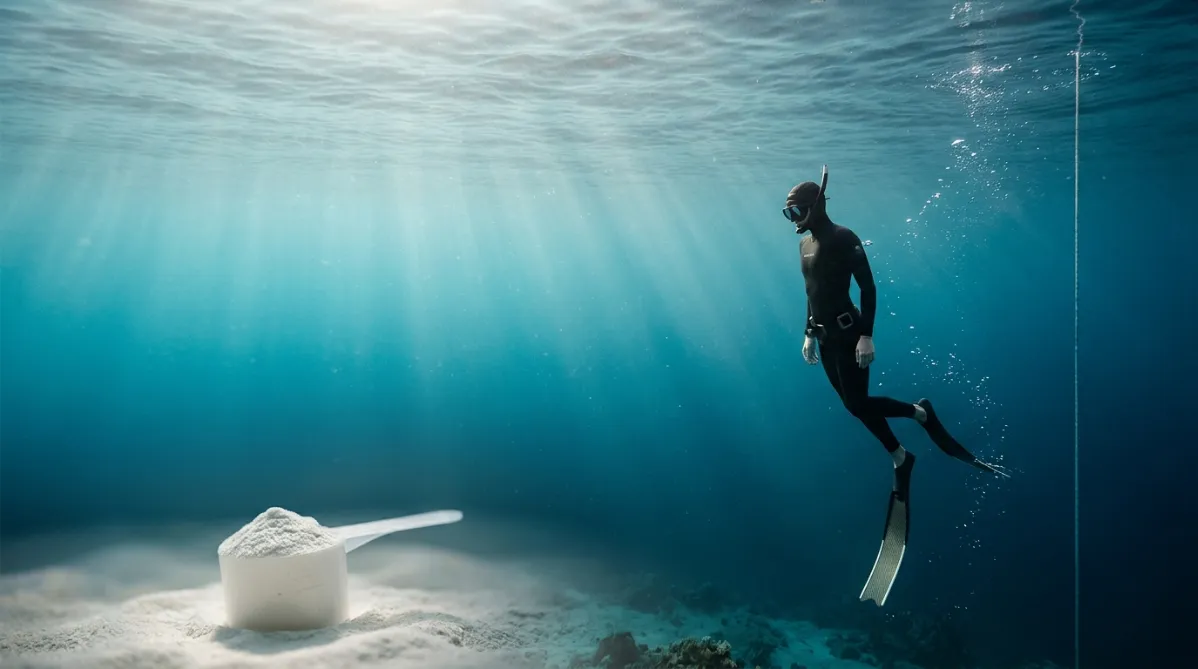
A wide, cinematic landscape photograph of a freediver suspended mid-water in a calm, sunlit turquoise sea, shot from slightly below so the surface glimmers above like rippling silver glass. The diver wears a sleek matte black wetsuit and a long, elegant pair of carbon fins. Their body is streamlined, arms relaxed at their sides, head tilted slightly down in a state of serene focus. Shafts of soft golden sunlight pierce the water diagonally and illuminate fine floating particles and a trail of tiny bubbles rising from the diver's fins. A single thin dive line descends vertically into deeper blue at the right of the frame, adding a graphic compositional element.

In the lower left foreground, slightly out of focus, a minimalist still-life element rests on a pale sandy seabed: a small, clean white scoop with a mound of fine white powder, casually echoing creatine without any text or labels. The scoop is softly lit and has a shallow depth of field blur, creating a gentle visual link between supplement and sport.

The color palette is refined and modern: deep teal, aquamarine, soft cerulean, warm cream highlights, and touches of sunlit gold. The water gradients smoothly from bright, luminous turquoise near the top to a rich inky navy at the bottom, giving depth and a sense of quiet intensity. Leave generous negative space on the left third of the image for headline placement, with the diver positioned on the right third following the rule of thirds.

The mood is calm, athletic, and contemplative, like an editorial image from a premium health and science magazine. Style: high-end editorial photography, natural light, subtle film grain, soft contrast, crisp detail on the diver and gentle bokeh in the background. No text, no logos, no futuristic or sci-fi elements, no graphics overlays.
nutrition

La creatina funciona incluso sin respirar: lo que revela un estudio en apneístas

BY DR. GYMBRO ·

La creatina es conocida por ayudarte a levantar más peso y a sprintar más rápido, pero, ¿puede ser útil cuando no respiras en absoluto? Un ensayo doble ciego con apneístas entrenados demostró que una fase de carga de 7 días con 20 g/día aumentó el trabajo total y el tiempo hasta el agotamiento en una prueba de ciclismo con apnea. Curiosamente, los niveles de lactato sanguíneo fueron menores en el grupo que tomó creatina que en el placebo, a pesar del mejor desempeño. Aquí explicamos qué hizo el estudio, quién podría beneficiarse y por qué una muestra de solo 20 buceadores obliga a mantener las expectativas bajo control.
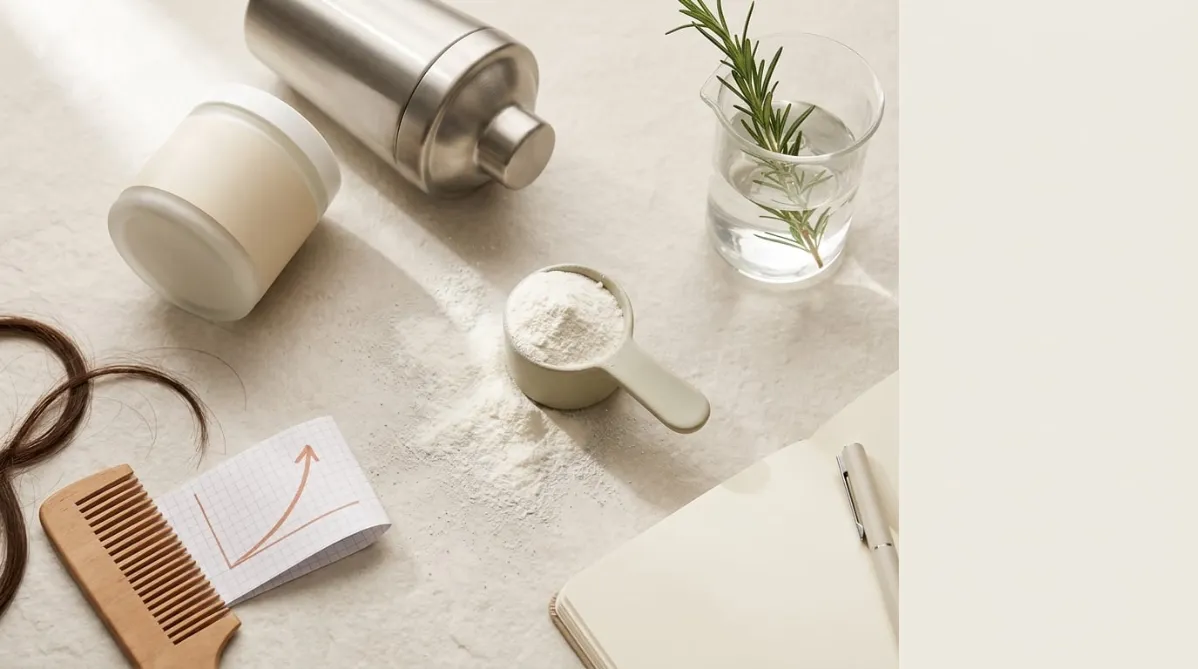
A bright, modern editorial flat-lay photographed from above on a soft off-white stone surface. At the center sits a matte ceramic scoop heaped with fine white creatine powder, with a loose dusting of powder fanning out across the surface. Beside it is a minimalist frosted-glass jar with a plain label and a brushed-steel shaker bottle lying on its side. To the left, a wooden comb and a small folded strip of graph paper with a single hand-drawn upward curve in muted terracotta ink, suggesting a data spike without any text. A few loose strands of dark brown hair curve elegantly across the stone near the comb. To the right, a clean glass beaker filled with water and a sprig of green rosemary, and an open notebook with blank pages and a sleek pen. The palette is warm neutrals: cream, sand, soft sage green, and a single accent of terracotta orange. Natural window light falls from the upper left, casting long, gentle shadows and a subtle diffused glow. The composition leaves generous negative space on the right third for title overlay. Shallow depth of field with crisp focus on the powder scoop, a premium health-and-science magazine look, minimalist, calm, and trendy, with fine grain and soft contrast. Landscape 16:9 framing.
science research

Creatina y caída del cabello: el aumento del 56 % de DHT explicado

BY DR. GYMBRO ·

Un estudio de 2009 mostró que una fase de carga de creatina de 7 días (25 g/día) elevó el DHT en un 56 %, y que con una dosis de mantenimiento de 5 g/día los niveles permanecieron alrededor de un 40 % por encima de la línea de base, mientras que la testosterona no cambió. Como el DHT está relacionado con la calvicie de patrón masculino, este hallazgo avivó el debate sobre la creatina y la pérdida de pelo. Sin embargo, el ensayo contó con solo 20 jugadores de rugby, duró tres semanas y nunca midió el cabello. Estudios posteriores no han reproducido consistentemente el aumento de DHT. Aquí se resume lo que realmente muestra la investigación, a quién le puede interesar y cómo actuar si te preocupa.

This page is available in